There are not many places in the world where you can catch sockeye salmon hundreds of kilometres from the ocean, in a desert valley, during the hottest weeks of summer. The Okanagan is one of them. The fish that return here every year, called sc̓win in nsyilxcən (the language of the syilx Okanagan people), make one of the longest freshwater migrations of any sockeye population on the Pacific coast. It is also one of the most carefully managed fisheries we know of.
This is what we tell guests asking about a sockeye charter, and what we think every angler should know before they cast a line.
The story behind the run
By the late 1990s, Okanagan sockeye were nearly gone. Returns to Osoyoos Lake had crashed to a few thousand fish, the run had been eliminated above McIntyre Dam, and the population was on a path most biologists thought ended in extinction.
What turned that around was decades of work led by the Okanagan Nation Alliance (ONA), the syilx government for the territory we fish in. ONA's fisheries team, partnering with the Penticton Indian Band hatchery, the Osoyoos Indian Band, federal and provincial agencies, and counterparts in Washington State, rebuilt the run year by year. Sockeye were experimentally reintroduced into Skaha Lake. Fish passage was opened past previously impassable structures. Every spring, ONA releases millions of sockeye fry into Okanagan waters. In 2025, more than five million.
The recreational sockeye fishery exists because of that work. When openings happen, they happen because the run came back strong enough to share. That is the deal we accept every time we go fishing for them.
When to fish for sockeye in the Okanagan
The Okanagan sockeye run is a late-summer fishery. Fish begin moving out of the Columbia River and into the Okanogan River system in early July, cross Wells Dam in Washington State through mid-July, hold in cold-water refugia through the warmest weeks, and push up into Osoyoos Lake from late July through September.
The recreational opening, when there is one, is set by Fisheries and Oceans Canada (DFO) based on the actual run strength counted at the dams. The window typically falls in August. Some years are generous: in 2024, more than 300,000 sockeye reached the Okanagan to spawn, and the recreational fishery had a strong season. Other years are constrained. In 2025, thermal barriers on the Okanogan and Columbia rivers stalled the run early, returns came in well below forecast, and harvest was limited.
Two things follow. First, we don't book sockeye charters in February for an August date that may not exist. We confirm trips once DFO posts the season and we know what the run will support. Second, we are straight with guests about what the year is shaping up to look like, including when it isn't a strong one.
Where the sockeye run goes
Osoyoos Lake is the heart of the fishery. The lake is the first significant body of water that returning sockeye reach after their upstream migration, and it is where most of the recreational opportunity has historically been concentrated.
In stronger years, fish push north into Skaha Lake (the result of the Skaha reintroduction work) and, in some years, into the southern arm of Okanagan Lake. We adjust our trip plan to where the fish are holding and where the openings allow.
How we fish for sockeye
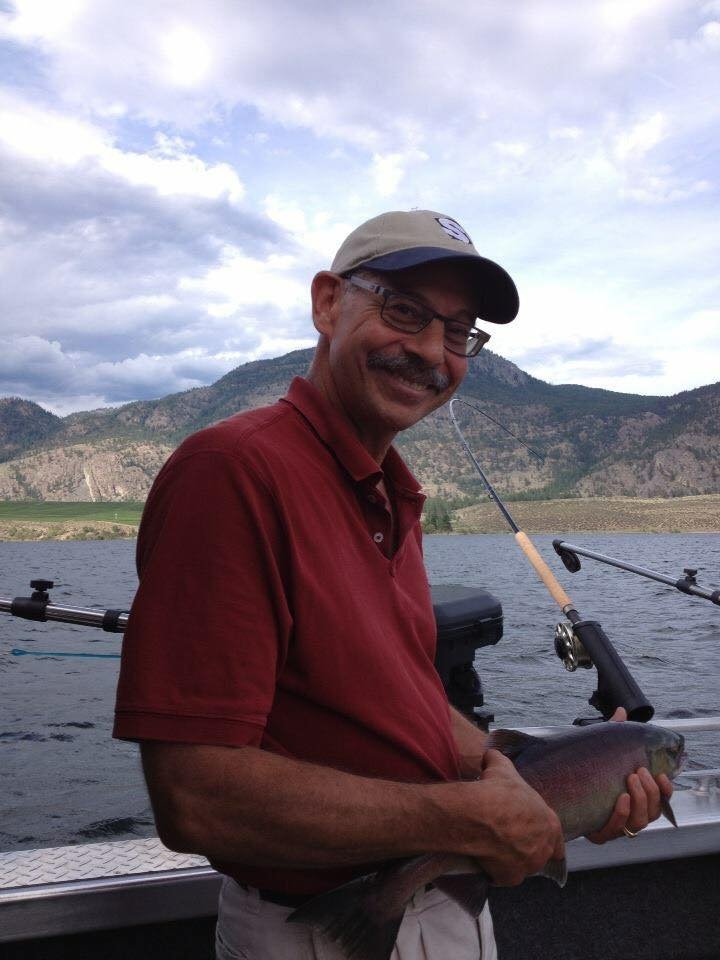
Sockeye are pelagic feeders (in the Ocean) that hold at depth in cold water. We target them by downrigger trolling, the same core technique we use for kokanee and rainbow trout, but with adjustments. Sockeye in Osoyoos hold deeper than kokanee in Okanagan Lake. Lure colour matters more than it does for trout: small pink and red dodgers paired with a hoochie or small spinner are the workhorses. Trolling speeds run slower than kokanee speeds, often between 1.0 and 1.4 knots.
The fish fight differently than the trout we catch the rest of the year. Sockeye are not as acrobatic as a rainbow, but they are persistent and surprisingly strong for their size, and they often run deep more than once before they come to the boat.
What to expect on a sockeye charter
Sockeye trips run as full-day charters. We supply the boat, downrigger setups, and tackle. You bring your BC freshwater fishing licence, any salmon stamps DFO requires for that year's opening (we will tell you exactly what is needed when we confirm), food and drink, and weather-appropriate layers.
Catch rates vary with the run. In a good year, two-fish daily limits are achievable. In a weak year, we may release more than we keep, or shift to other species, depending on what the regulations allow.
Conservation comes first
The Okanagan sockeye run is back from the edge, but it is not secure. Climate change is hitting the Okanogan River corridor hard. Thermal barriers that were set up in late July are now appearing in June. Spawning habitat upstream remains constrained. Returns vary widely from year to year, and odd-numbered years are usually weaker than even ones.
We fish this run because we love it, and because we believe a well-run recreational fishery is part of what keeps people invested in protecting it. We also stop fishing when we should. If the run is not strong, we do not press it. That is the bargain that lets us be on the water in the first place.
Plan a sockeye charter
If you are thinking about a sockeye trip, the best move is to reach out in late spring or early summer. We can talk through what the season is shaping up to bring, what the alternatives are if the opening is delayed or limited, and what dates make sense to hold.
Book your Okanagan fishing charter →
For more on the lakes we fish and the other species we target, see our posts on kokanee fishing in the Okanagan, rainbow trout fishing, and trolling, the technique that anchors all our trips.